The Zayed National Museum represents a strategic knowledge platform for future generations, connecting innovation and history. 300,000 years of human history and 3,000 artifacts within the museum's collection.
The Zayed National Museum stands as a prominent cultural and intellectual beacon in the heart of the Saadiyat Cultural District. The National Museum of the UAE celebrates the legacy of the nation's founding father, the late Sheikh Zayed bin Sultan Al Nahyan, may God have mercy on his soul, and presents a comprehensive narrative of the country's ancient history, from ancient times to the present, within a vision that seeks to strengthen intergenerational connections and enhance national identity awareness.
Mohamed Khalifa Al Mubarak, Chairman of the Department of Culture and Tourism - Abu Dhabi, confirmed that the museum represents a strategic knowledge platform for future generations, connecting innovation and history, and allows visitors to learn about the country's ancient history through interactive and inspiring methods.
He stated that the Zayed National Museum honors the authentic values rooted in UAE society for decades—values that inspire generations and motivate them to achieve further successes and national accomplishments.
He added that the late Sheikh Zayed bin Sultan Al Nahyan and the nation's founders established the country on a legacy spanning thousands of years and were keen to support exploratory and archaeological missions that revealed the depth of Emirati history across the ages.
He pointed out that the Zayed National Museum, as the country's national museum, conveys noble messages inspired by the legacy of the nation's founding father, may God have mercy on his soul, and his deep commitment to cultural heritage, education, and the enhancement of identity and belonging.
The Zayed National Museum features six main exhibition halls. The 'Our Beginnings' hall sheds light on various aspects of the life, legacy, and values of the late Sheikh Zayed bin Sultan Al Nahyan through a rich and authentic narrative. The 'Through Our Nature' hall showcases the diversity of the UAE's terrain and its historical impact on lifestyles. The 'To Our Ancestors' hall explores human activity dating back some 300,000 years, alongside early trade in the Arabian Gulf.
The 'Through Our Bonds' hall narrates the evolution of the Arabic language and the spread of Islam, as well as the impact made by the people of the UAE in intellectual and innovative spheres. The 'On Our Shores' hall focuses on the development of coastal settlements based on pearl diving, fishing, and trade, and their role in strengthening Emirati identity through political, commercial, and cultural exchange.
The 'From Our Roots' hall takes visitors on a journey to traditional ways of life, old social and economic customs, while the 'Garden Path' forms an outdoor hall allowing a trace of the life of Sheikh Zayed, may God have mercy on his soul, through the natural environments that shaped his vision. It features local plants from the desert, oases, and urban areas.
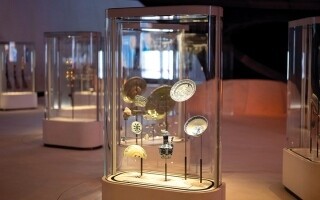
The exhibition halls cover approximately 300,000 years of human history, from the Stone Age to the modern era. The museum's collection comprises over 3,000 artifacts, 1,500 of which are displayed in the halls. It includes archaeological finds from across the nation, as well as international and regional loans and local contributions that enrich the experience and highlight the richness of Emirati heritage.
The museum offers a range of educational programs for the younger generation and supports historical and archaeological research through the Zayed National Museum Research Fund, which provides grants for the study of Emirati heritage and culture. This contributes to preparing a new generation of researchers, historians, and archaeologists and opens avenues for cooperation with teachers and educational institutions to encourage youth to engage in these vital fields.